
Clinnova-RD
Using health data and artificial intelligence to improve personalised care for rheumatoid diseases
Rheumatoid diseases (RD) are chronic conditions that can affect the joints, muscles, and other organs, often causing pain, inflammation, fatigue, and reduced quality of life. Although many treatment options are available, it can be difficult to predict how the disease will progress and which treatment will work best for each individual. The Clinnova-RD project aims to improve personalised care for people living with RD. By combining clinical information with biological, digital, and patient-reported data, researchers hope to identify markers that can help predict disease progression and how patients will respond to different treatments. Using advanced data science and artificial intelligence, the project will analyse information collected during routine care and research to better understand why patients experience different disease courses and treatment outcomes. Researchers also aim to improve the monitoring of patient well-being and support more individualised treatment decisions. In the long term, Clinnova-RD seeks to contribute to a more personalised, preventive, and data-driven approach to rheumatology care, helping healthcare professionals select the most appropriate treatment strategies and improve outcomes for people living with rheumatoid diseases.


Clinnova-RD is part of the Clinnova programme
About the study


Locations

9, rue Edward Steichen
L-2540 Luxembourg
Contact

Want to learn more?
Who can participate?

Eligible participants
Clinnova-RD is recruiting participants recently diagnosed with a RD and requiring treatment initiation or treatment change. Specifically, you may be eligible to participate if you:
- Are 18 years of age or older.
- Have been diagnosed with one of the rheumatoid diseases included in the study, namely Rheumatoid Arthritis (RA), Systemic Lupus Erythematosus (SLE), Systemic Sclerosis (SSc) or Antisynthetase Syndrome (ASSD).
- Have recently been diagnosed in the last 2 years and require treatment initiation, or are experiencing a significant change in your disease or treatment, such as s treatment change recommended by your rheumatologist, increased disease activity or a disease flare.
- Are willing and able to attend study visits, complete study assessments, and provide the required data and biological samples.
- Are able to understand the study information and provide written informed consent.

Exclusion criteria
You may not be eligible to participate if you:
- Have a condition that would make it difficult to take part in the study procedures or attend study visits.
- Are not fluent in French, English, or German.
- Are pregnant at the time of inclusion.
- Are participating in another prospective interventional clinical trial.
- Are experiencing an improvement in disease activity rather than a worsening of symptoms.
- Are changing treatment solely because a medication is unavailable or for safety-related reasons rather than because of disease activity.
- Have another rheumatic or autoimmune disease in addition to the condition being studied.
- Additional disease-specific eligibility requirements may apply and will be assessed by the study physician during screening.

Not sure about eligibility?
The study team will review each case individually to determine eligibility. If you are unsure whether you are eligible, do not hesitate to contact us.
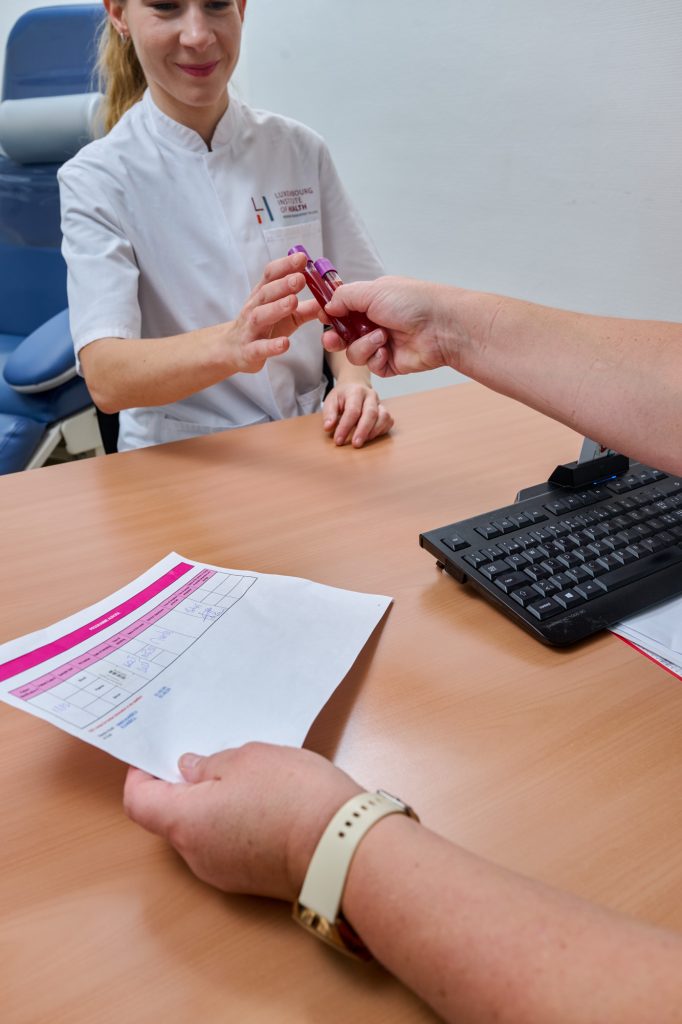
What will participants do?
01.
Attend study visits
These will take place at the start of the study, after 3 months, and after 12 months during the first year. Additional visits may be scheduled if you experience a disease flare or a significant treatment change.
02.
Provide health and lifestyle information
This will include demographic information, medical history, laboratory results, and physical examination findings.
03.
Complete questionnaires
These will be completed through the Colive web application at different time points during the study to help researchers better understand your symptoms, well-being, and quality of life.
04.
Provide voice recordings (optional)
These will be submitted through the Colive app as part of the study assessments.
05.
Provide biological samples and imaging data
Where applicable, the following samples and data will be collected during study visits: blood, stool, urine, saliva, hair, synovial fluid from Standard Of care.
06.
Use a smartwatch (optional)
A smartwatch provided by the study will monitor your physical activity and sleep quality.
07.
Take part in long-term follow-up
This may continue for up to 5 years. After the first year, medical information will be collected annually, and questionnaires will be completed every 6 months.
Contact & location

Hôpitaux Robert Schuman (HRS) – Site Kirchberg
Hôpitaux Robert Schuman (HRS) – Site Kirchberg
9, rue Edward Steichen
L-2540 Luxembourg
Study team

Dr Marco Hirsch
Hôpitaux Robert Schuman (HRS)
Dr Jonathan Turner
Group leader, Immune Endocrine & Epigenetics
Luxembourg Institute of Health (LIH)Participating institutions
Clinnova-RD is a collaboration between more than 25 clinical and research partners across Luxembourg, Switzerland, France, and Germany. Participating institutions in Luxembourg include:



Funded by
Luxembourg National Research Fund (FNR)
Want to learn more about the study?
Visit the website for full study details, scientific publications and research background.
Related news & updates
Small country, significant capacity
Luxembourg may be one of Europe’s smallest countries, but the Luxembourg Research Clinic demonstrates how its highly connected national network…

Clinnova Consortium Agreement signed, marking a major milestone for health research across Europe
Thanks to a joint investment from LIH and the Ministry of Health, the national biobank accessible to LRC studies has…

Building on Luxembourg’s Research Strengths
The Luxembourg Research Clinic brings together the strengths of Luxembourg’s leading healthcare, research and academic institutions, building on established expertise…
Related events
Clinical Research Luxembourg Conference

Why does clinical research matter today in Luxembourg? Clinical research plays a vital role in improving patient care, driving medical…