
Care4Asthma
Advancing diagnosis and treatment of pediatric asthma by deep immunophenotyping and evaluation of two spacer devices for inhaled corticosteroid administration
Asthma is one of the most common chronic diseases in children, and successful treatment depends on using inhaled medication correctly and consistently. This study aims to investigate whether a new digital inhaler spacer, called the Whizz spacer, can help children with asthma improve their inhaler technique, increase adherence to treatment, and achieve better asthma control. The study will compare the Whizz spacer with a standard spacer device in children aged 5 to 16 years with partly controlled or uncontrolled asthma. Researchers will also analyse biological samples and environmental factors, such as allergen and pollution exposure, to identify biomarkers that may help predict treatment response and support more personalised asthma care. The findings could contribute to simpler, more effective asthma management strategies for children and their families.

About the study


Locations

4, rue Ernest Barblé
L-1210 Luxembourg
Contact


Ready to take part?
Our team is available to answer all your questions before you decide.
Who can participate?
The study team will review each case individually. If you are unsure whether your child is eligible, contact us — we are here to help.

Eligible participants
You may be eligible to participate as a patient if you:
- Are between 5 and 16 years of age.
- Have been diagnosed with asthma requiring regular treatment with an inhaled corticosteroid (with or without a long-acting bronchodilator) delivered by a metered-dose inhaler.
- Have partly controlled or uncontrolled asthma.
- Have a parent or legal guardian who is willing to provide written informed consent (and, where applicable, the child’s assent).
Your child may be eligible to participate as a non-asthmatic control if they:
- Are between 5 and 16 years of age.
- Have not been diagnosed with asthma.
- Have a blood test foreseen in their medical routine follow up for a non-respiratory disease.
- Have a parent or legal guardian who is willing to provide written informed consent (and, where applicable, the child’s assent).

Exclusion criteria
Your child may not be eligible to participate as a patient if they:
- Have had a severe asthma attack requiring treatment with oral or injectable corticosteroids within the past 2 weeks or currently have a respiratory infection.
- Have another chronic lung disease, such as cystic fibrosis.
- Have severe asthma.
- Have a serious underlying medical condition or a weakened immune system.
- Are receiving immunotherapy (for participants in Luxembourg taking part in the biomarker research component of the study).
- Have a neurological condition or cognitive impairment that would make participation difficult.
- Have a brother or sister who is already participating in the study.
Your child may not be eligible to participate as a non-asthmatic control if they:
- Have a confirmed diagnosis of asthma or respiratory or food allergy.
- Have a respiratory infection.
- Have another chronic lung disease, such as cystic fibrosis.
- Have a serious underlying medical condition or a weakened immune system.
- Are receiving immunotherapy (for participants in Luxembourg taking part in the biomarker research component of the study).
- Patients with underlying pro-inflammatory disorder (e.g., obesity, chronic inflammatory bowel disease)
- Have a neurological condition or cognitive impairment that would make participation difficult.
- Have a brother or sister who is already participating in the study.

Not sure about eligibility?
The study team will review each case individually to determine eligibility. Do not hesitate to reach out — participation is always voluntary and fully supported.

What will participants do?
01.
Use the assigned inhaler spacer
You will use either the Whizz digital spacer or the standard AeroChamber Plus® Flow-Vu® with your child’s prescribed asthma medication for 12 weeks.
02.
Complete a daily study diary
You will record your child’s asthma treatment and inhaler use throughout the study.
03.
Attend study visits with your child
These will take place at the start of the study, after 6 weeks, and after 12 weeks. Your child’s asthma control and quality of life will be assessed through questionnaires and clinical evaluations.
04.
Have your child undergo breathing tests
Spirometry and a fractional exhaled nitric oxide (FeNO) measurement will be performed at the beginning and end of the study to assess lung function and airway inflammation.
05.
Provide biological samples
These will be collected at the beginning and end of the study to help researchers identify biomarkers associated with asthma and treatment response.
06.
Provide a dust sample
This will be collected from your child’s bedroom at the start of the study to investigate how exposure to allergens may influence asthma symptoms.
07.
Provide a small hair sample
This will be collected at the start of the study to investigate exposure to environmental pollutants.
08.
Have your child wear an activity bracelet (optional)
This will be worn for 7 days at the beginning and again at the end of the study to monitor physical activity.
Contact & location
For further information or to take part in the Care4Asthma study, please contact the study team.
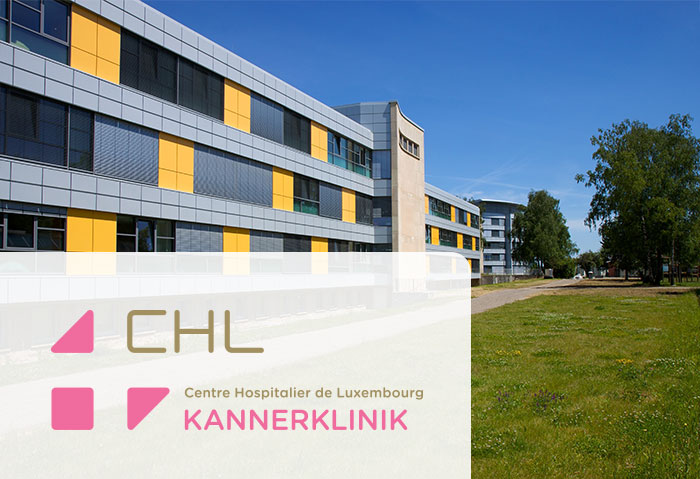
Centre Hospitalier de Luxembourg – CHL KannerKlinik
CHL KannerKlinik
4, rue Ernest Barblé
L-1210 Luxembourg
Study team

Dr Christiane Hilger
Group Leader, Molecular & Translational Allergology
Luxembourg Institute of Health (LIH)Participating institutions
Care4Asthma is an international study involving partners from Belgium (Clinique CHC Montlégia, Liège), Germany (Charité Berlin) and Luxembourg. Partners in Luxembourg include:



Funded by
Fonds National de la Recherche (FNR)
The Ministry of Economy
Luxinnovation
Want to learn more about the study?
Visit the Luxembourg Institute of Health website for full study details, scientific publications and research background.
Related news & updates

Small country, significant capacity
Luxembourg may be one of Europe’s smallest countries, but the Luxembourg Research Clinic demonstrates how its highly connected national network…

Clinnova Consortium Agreement signed, marking a major milestone for health research across Europe
Thanks to a joint investment from LIH and the Ministry of Health, the national biobank accessible to LRC studies has…

Building on Luxembourg’s Research Strengths
The Luxembourg Research Clinic brings together the strengths of Luxembourg’s leading healthcare, research and academic institutions, building on established expertise…
Related events
Clinical Research Luxembourg Conference

Why does clinical research matter today in Luxembourg? Clinical research plays a vital role in improving patient care, driving medical…