
CON-VINCE
COvid-19 National survey for assessing Viral spread by Non-affected CarriErs.
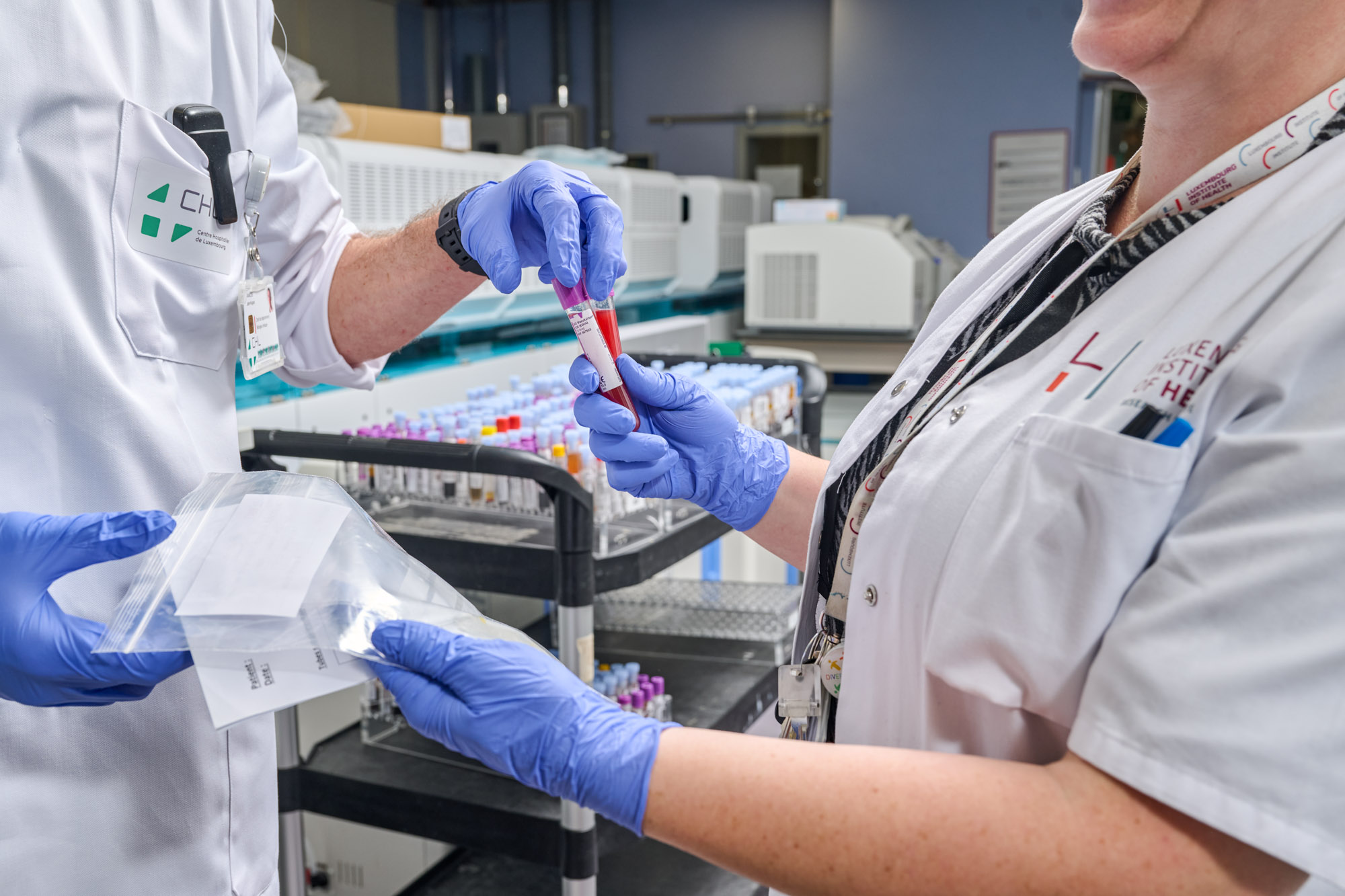
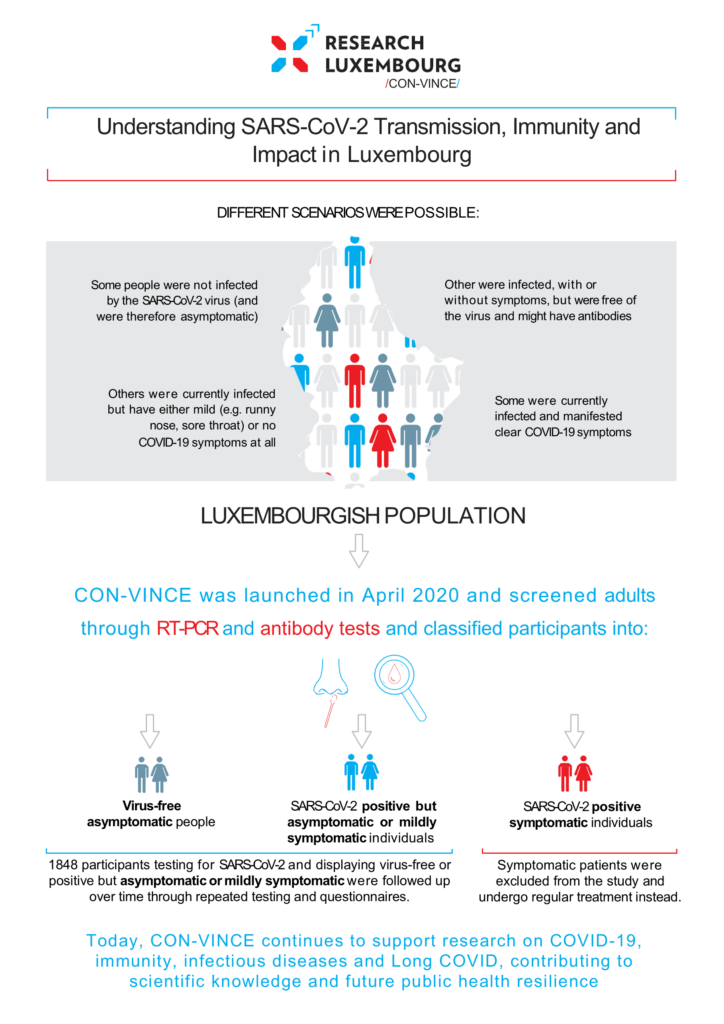
CON-VINCE is a national research project launched in April 2020 to better understand the spread and impact of COVID-19 in Luxembourg. The study enrolled 1,848 adults representative of the Luxembourg population, who were screened for SARS-CoV-2 infection and followed over time through repeated testing and questionnaires. Particular attention was given to asymptomatic and mildly symptomatic infections and their potential role in viral transmission.
Specifically, CON-VINCE aimed to investigate how SARS-CoV-2 spread through the population, which factors influenced susceptibility and disease severity, and how antibody responses and long-term immunity evolved following infection and vaccination. It also examined the epidemiological, socioeconomic, behavioural and psychological impacts of the pandemic and related containment measures.
Today, the data and biological samples collected through CON-VINCE continue to provide an important research resource for studying COVID-19, immunity and infectious diseases, with its samples and data being used across multiple related research projects, such as CoVaLux and the EU-funded ORCHESTRA and COMMUTE studies. In addition, CON-VINCE contributes to Long COVID research, characterising the long-term consequences of SARS-CoV-2 infection, including its prevalence, risk factors and health impact. Overall, the knowledge generated can help researchers better understand responses to infection and contribute to more effective public health strategies for future health threats.

About the study


Contact

Want to learn more?
To learn more about the CON-VINCE study, its data, samples and ongoing research activities, please contact the CON-VINCE study team: con-vince@lih.lu
Who could participate?

Eligible participants
Adults aged 18 years and older residing in Luxembourg, including asymptomatic and mildly symptomatic individuals with respect to COVID-19 (SARS-CoV-2).


What did participants do?
Participation was voluntary at every step, and participants could withdraw at any time without providing a reason. If you participated, you were asked to:
01.
Provide electronic informed consent
through a secure online platform and share contact details required for study participation.
02.
Complete an online questionnaire
(approximately 20–35 minutes) covering demographic, epidemiological, clinical, psychological, and socio-economic information, including COVID-19 symptoms, travel history, and vaccination status.
03.
Provide biological samples at a laboratory near you,
including blood, induced sputum, nasal swabs, and oropharyngeal swabs.
04.
Undergo simple non-invasive assessments,
including a smell test and measurement of blood pressure, heart rate, and respiratory rate.
05.
Optionally provide additional biological samples,
including urine and stool samples collected using a home sampling kit.
06.
Participate in follow-up assessments throughout the study.
initially at weeks 2, 4, 6 and 8, followed by a questionnaire at around 9 months, and a longer-term assessment at approximately 12 months. A subpopulation was followed up later via the ORCHESTRA project.
The main participant follow-up for CON-VINCE has now been completed. The data and biological samples collected continue to support national and international research, and participants may be contacted again for related research in accordance with the consent they provided.
Where are we currently?
CON-VINCE has completed its recruitment phase. A full overview of the CON-VINCE study was published in a scientific journal and can be accessed freely here. CON-VINCE data and samples remain a valuable resource for research on COVID-19, immunity and infectious diseases, and neurological diseases.
Current research includes:
- Long COVID: long-term consequences of SARS-CoV-2 infection.
- COVID-19 and brain health: possible links with Parkinson’s and Alzheimer’s disease, and early blood markers of risk (follow-up study: COMMUTE).
- Long-term immunity: immune responses after infection and vaccination.
- Wider impact of the pandemic: psychological and socio-economic effects.
Together, this research helps us better understand how people respond to infection, and supports more effective public health strategies for future health threats.
Below we link the scientific publications using samples and data collected in CON-VINCE:
- Snoeck, C.J. et al. (2020). Prevalence of SARS-CoV-2 Infection in the Luxembourgish Population – the CON-VINCE Study. medRxiv 2020.05.11.20092916. https://doi.org/10.1101/2020.05.11.20092916
- Ribeiro, F. et al. (2021). The Evolution and Social Determinants of Mental Health during the First Wave of the COVID-19 Outbreak in Luxembourg. Psychiatry Res 2021, 303, 114090. https://doi.org/10.1016/j.psychres.2021.114090
- Pauly, C. et al. (2021). The Moderating Role of Resilience in the Personality-Mental Health Relationship During the COVID-19 Pandemic. Front Psychiatry 2021, 12, 745636. https://doi.org/10.3389/fpsyt.2021.745636
- Holuka, C. et al. (2021). Adverse Life Trajectories Are a Risk Factor for SARS-CoV-2 IgA Seropositivity. J Clin Med 2021, 10 (10), 2159. https://doi.org/10.3390/jcm10102159
- Meyrath, M. et al. (2022). Nanoluciferase-based cell fusion assay for rapid and high-throughput assessment of SARS-CoV-2-neutralizing antibodies in patient samples. Methods Enzymol. 2022;675:351-381. https://doi.org/10.1016/bs.mie.2022.07.015
- Da Silva, E. et al. (2023). Validation of a SARS-CoV-2 Surrogate Neutralization Test Detecting Neutralizing Antibodies against the Major Variants of Concern. Int J Mol Sci. 2023 Oct 6;24(19):14965. https://doi.org/10.3390/ijms241914965
- De Nies, L. et al. (2023) Altered infective competence of the human gut microbiome in COVID-19. Microbiome 2023, 11, 46. https://doi.org/10.1186/s40168-023-01472-7
- Tsurkalenka, O. et al. (2024). Creation of a pandemic memory by tracing COVID‑19 infections and immunity in Luxembourg (CON‑VINCE). BMC Infect Dis 24, 179 (2024). https://doi.org/10.1186/s12879-024-09055-z
- Pauly, L. et al. (2024). Lessons learned from the COVID-19 Pandemic: Identifying hesitant groups and exploring reasons for vaccination hesitancy, from adolescence to late adulthood. Front. Public Health 12:1456265. https://doi.org/10.3389/fpubh.2024.1456265
- Martins Conde, P. et al. (2025). Co-occurrence of memory impairment and fatigue distinguishes post COVID from pandemic-related health effects in the 4-year CON-VINCE cohort study. Sci Rep. 2025 Oct 27;15(1):37381. https://doi.org/10.1038/s41598-025-19984-7
- Matías-García, P.R. et al. (2026). DNAm landscape up to 4 months post SARS-CoV-2 infection: insights from four population-based cohorts. Clin Epigenetics. 2026 Jun 13;18(1):116. https://doi.org/10.1186/s13148-026-02166-1

Contact
To learn more about the CON-VINCE study, its data, samples and ongoing research activities, please contact the CON-VINCE study team: con-vince@lih.lu
Principal Investigator

Prof. Dr Rejko Krüger
Coordinator, National Centre for Excellence in Research on Parkinson’s disease (NCER-PD); Director of Neurology, Luxembourg Research Clinic (LRC), Luxembourg Institute of Health (LIH); Neurologist and Medical coordinator, Réseau de Compétences Maladies Neurodégénératives, Centre Hospitalier de Luxembourg (CHL); Professor for Clinical and Experimental Neuroscience, University of Luxembourg (UL)
Participating institutions








Funded by
Fonds National de la Recherche (FNR)
André Losch Foundation
Want to learn more about the study?
Visit the Research Luxembourg website for full study details, scientific publications and study impact:
Related news & updates
Clinnova Consortium Meeting 2026: Progressing towards the next phase
After building the foundations for cross-border precision medicine research, partners are now focused on making the data work together. Last…
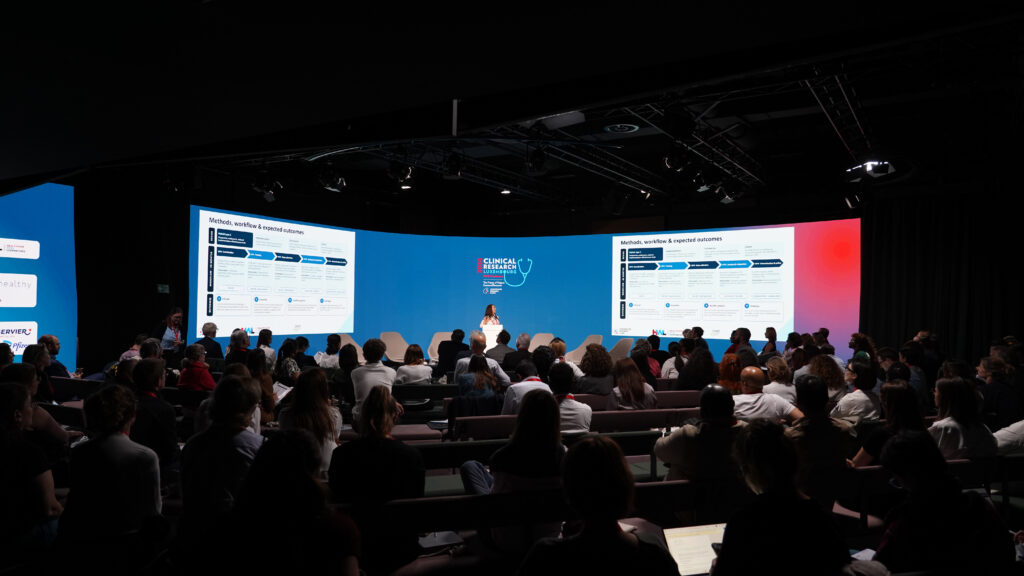
Luxembourg Research Clinic was launched during the Clinical Research Conference to strengthen patient access to clinical research
On September 29, the Luxembourg Institute of Health (LIH) and its national partners officially inaugurated the Luxembourg Research Clinic (Fuerschungsklinik…
Small country, significant capacity
Luxembourg may be one of Europe’s smallest countries, but the Luxembourg Research Clinic demonstrates how its highly connected national network…
Clinnova Consortium Agreement signed, marking a major milestone for health research across Europe
Thanks to a joint investment from LIH and the Ministry of Health, the national biobank accessible to LRC studies has…

Building on Luxembourg’s Research Strengths
The Luxembourg Research Clinic brings together the strengths of Luxembourg’s leading healthcare, research and academic institutions, building on established expertise…
Landmark agreement ensures sustainability of Luxembourg Parkinson’s programme
Three leading researchers have joined the LRC's scientific committee, bringing expertise in immunology, rare diseases, and translational genomics from institutions…
Related events
Clinical Research Luxembourg Conference


Why does clinical research matter today in Luxembourg? Clinical research plays a vital role in improving patient care, driving medical…