
PADOVA
A study to evaluate the efficacy and safety of intravenous Prasinezumab in participants with early Parkinson’s disease
Parkinson’s disease is a progressive neurological condition that affects movement and can lead to increasing difficulties with daily activities over time. Current treatments help manage symptoms, but they do not slow down the progression of the disease. The PADOVA study is an international clinical trial investigating whether an experimental treatment called prasinezumab can slow the progression of Parkinson’s disease in people at an early stage of the condition. Prasinezumab is designed to target alpha-synuclein, a protein that is believed to play a key role in the damage and loss of nerve cells associated with Parkinson’s disease. Researchers hope that by targeting this protein, prasinezumab may help protect brain cells and slow the worsening of symptoms. The study will compare prasinezumab with a placebo, while participants continue to receive their usual Parkinson’s disease medication. The findings from this research may contribute to the development of new treatments that address the underlying causes of Parkinson’s disease and improve care for people living with the condition.
FIRST RESULTS:
Six participants from Luxembourg took part in the study. Results were published in the journal Lancet in May 2026.

About the study


Locations

L-1210 Luxembourg
Contact


Want to learn more?

PADOVA is part of the NCER-PD programme
Who can participate?

Eligible participants
- Are between 50 and 85 years of age.
- Have been diagnosed with Parkinson’s disease within the last 3 years.
- Are currently receiving medication to treat Parkinson’s disease and have been on a stable treatment regimen for at least 3 months.
- Have early-stage Parkinson’s disease.
- Are willing and able to use a smartphone application to record Parkinson’s disease symptoms during the study.
- Are willing and able to wear a smartwatch to help monitor movement and other Parkinson’s disease-related symptoms.
- Are willing to undergo the study assessments required by the research team, including brain imaging examinations.

Exclusion criteria
- Have a form of Parkinsonism other than Parkinson’s disease.
- Have been diagnosed with Parkinson’s disease dementia.
- Have another significant neurological condition in addition to Parkinson’s disease.
- Have certain uncontrolled or serious medical conditions, including significant heart disease or uncontrolled high blood pressure.
- Have a recent history of drug or alcohol abuse.
- Have laboratory test abnormalities that could make participation unsafe.
- Have a known allergy or hypersensitivity to prasinezumab or similar treatments.
- Are unable to undergo the brain imaging procedures required for the study (MRI or DaT-SPECT scans).
What are the possible benefits of taking part?
Your health may or may not improve in this study, but the information that is learned may help other people who have a similar medical condition in the future.
What are the possible risks?
In the Phase 2b PADOVA clinical trial, the investigational Parkinson’s disease drug prasinezumab (formerly PRX002) demonstrated a favorable safety and tolerability profile, with overall side effect rates closely matching those of the placebo group. Results were published in the journal Lancet in May 2026.
Contact & location

Luxembourg Research Clinic (LRC)
6, Rue Nicolas-Ernest Barblé,
L-1210 Luxembourg
Study team

Prof. Dr Rejko Krüger
Coordinator, National Centre for Excellence in Research on Parkinson’s disease (NCER-PD); Director of Neurology, Luxembourg Research Clinic (LRC), Luxembourg Institute of Health (LIH); Neurologist and Medical coordinator, Réseau de Compétences Maladies Neurodégénératives, Centre Hospitalier de Luxembourg (CHL); Professor for Clinical and Experimental Neuroscience, University of Luxembourg (UL)
Centre Hospitalier de Luxembourg (CHL)Participating institutions
PADOVA is an international clinical trial sponsored by Hoffmann-La Roche and conducted in the UK, Spain, Italy, Poland, US, Canada, Austria, France and Luxembourg. Participating institutions in Luxembourg include:



Funded by
Hoffmann-La Roche
Want to learn more about the study?
Visit the website for full study details, scientific publications and research background.
Related news & updates

Small country, significant capacity
Luxembourg may be one of Europe’s smallest countries, but the Luxembourg Research Clinic demonstrates how its highly connected national network…
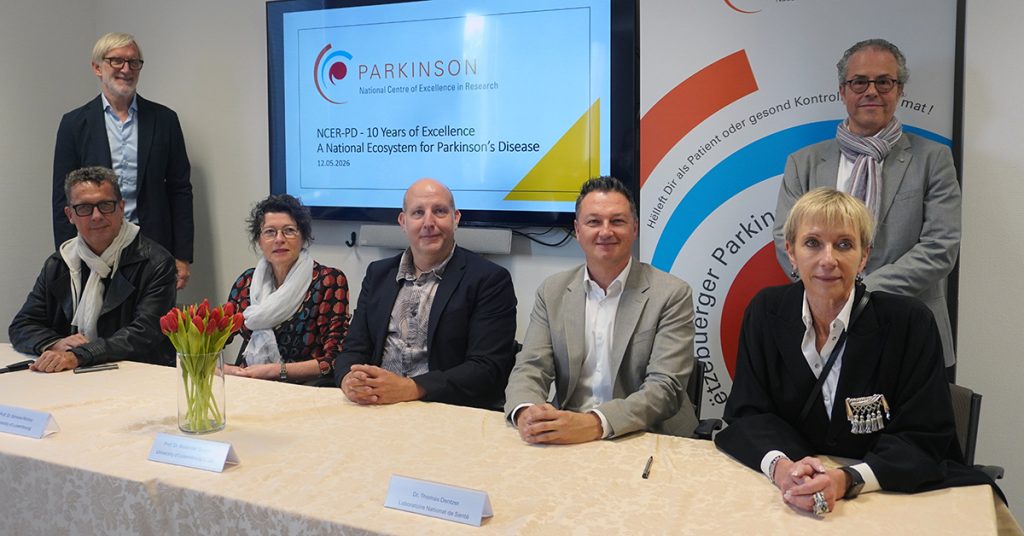
Landmark agreement ensures sustainability of Luxembourg Parkinson’s programme
Three leading researchers have joined the LRC's scientific committee, bringing expertise in immunology, rare diseases, and translational genomics from institutions…
Related events
Clinical Research Luxembourg Conference

Why does clinical research matter today in Luxembourg? Clinical research plays a vital role in improving patient care, driving medical…